
How it works
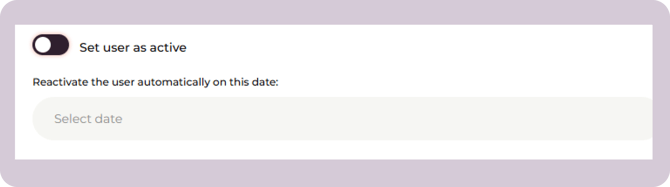
When you deactivate a user, you will see an optional field called “Reactivate the user automatically on this date”.
-
If you set a date, the user will automatically be reactivated on that date.
-
If you leave it empty, the user will remain deactivated until you manually reactivate them.
-
The field is only visible when a user is deactivated.
-
If you sync users from Microsoft Entra ID or Google Workspace:
- Entra ID with Sync user status turned on: Entra ID decides whether a synced user is active. You can’t deactivate the user in CyberPilot, so you can’t schedule a reactivation either.
- Entra ID with Sync user status turned off: you can deactivate the user and schedule a reactivation. The sync doesn’t change it.
- Google Workspace: you can deactivate the user and schedule a reactivation. If the user is suspended in Google when they are reactivated, the next sync deactivates them again.
Users who are deleted in Entra ID or Google, or removed from the synced group, are always deactivated at the next sync.
Read more in Microsoft Entra ID and Single Sign-On and Google Workspace sync and Single Sign-On.
Once a user is reactivated, they will:
-
Regain access to the CyberPilot app and training materials
-
Start receiving training notification emails again (e.g., new training enrollments and reminders about incomplete training)
If you use an onboarding plan, reactivation can also affect when the user gets onboarding training. See Training Planner: How to Schedule Enrollments.
Admin notification before reactivation
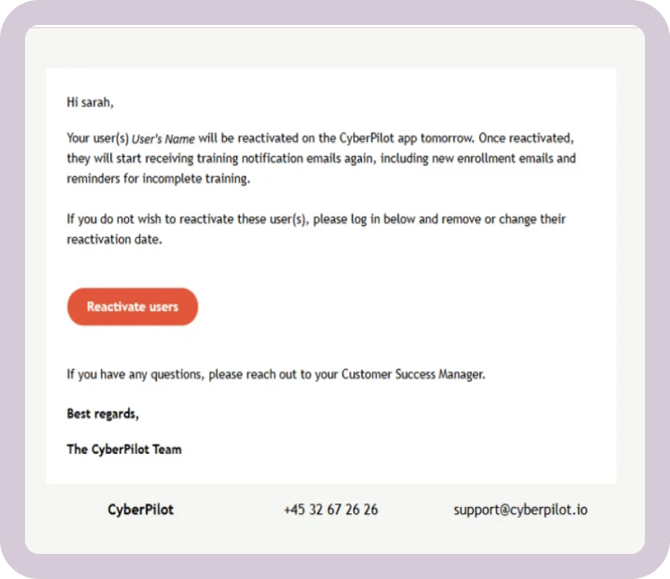
To help you stay informed, the platform automatically sends you an email notification one day before a user is reactivated.
The email looks like this:
Typical Use Cases
-
Parental or sick leave — temporarily deactivate users and automatically bring them back when they return.
-
Seasonal staff — easily plan user access based on employment periods.
-
Security management — ensure users who have left the organization are not reactivated accidentally.